Machine Guarding Requirements for Safer Industrial Operations
Machine guarding is one of the most basic and most important elements of industrial safety. In facilities with powered equipment, moving parts, rotating components, pinch points, and automated processes, serious risks can occur if workers are not adequately protected from contact. That is why machine guarding matters. It helps create a safer operating environment by reducing exposure to hazards during normal production, setup, adjustment, and service.
For industrial operations, machine guarding is not just about placing a barrier in front of motion. It is about understanding where hazards exist, how workers interact with equipment, and what protective measures help reduce the risk of injury. Safer systems depend on a combination of physical guards, presence-sensing devices, and control-based safety components that support safer machine use across the facility.
What Is Machine Guarding?
Machine guarding refers to the protective measures used to shield workers from hazards created by machinery. Those hazards can include moving parts, ingoing nip points, rotating shafts, flying chips, sparks, and areas where hands, clothing, or body parts could come into dangerous contact with equipment during operation.
In industrial environments, machine guarding can take several forms. It may involve fixed barriers, protective enclosures, presence-sensing devices, or control-based measures that help stop or prevent unsafe machine motion. The goal is not simply to cover equipment. It is to help prevent access to hazardous areas while allowing the machine to perform its intended function.
Why Machine Guarding Matters
Powered industrial equipment often creates risk during routine operation, not just during unusual events. Operators, technicians, and maintenance personnel may work near cutting zones, moving assemblies, conveyors, rotating mechanisms, or automated work cells where exposure can happen quickly if safeguards are missing or inadequate.
That is why machine guarding should be viewed as a core part of safer industrial operations. It helps reduce the chance of contact with dangerous motion, supports more controlled interaction with equipment, and reinforces the idea that safety must be designed into the system rather than added after the fact.
Common Machine Hazards
Point of Operation Hazards
The point of operation is the area where a machine performs work on material, such as cutting, pressing, shaping, or forming. Because this is often the most active part of the machine, it is also one of the most hazardous. Workers can be exposed to serious risk if guarding does not keep hands or body parts away from the operating zone.
Rotating and Moving Parts
Rotating shafts, couplings, belts, pulleys, chains, and gears can all create dangerous contact points. These hazards are especially serious because they can catch clothing, gloves, fingers, or tools unexpectedly. In many applications, fixed or enclosed guarding is needed to help prevent access during operation.
Pinch Points and Ingoing Nip Points
Pinch points and ingoing nip points occur where parts move toward each other or where material is drawn into moving equipment. These areas can create crush or entanglement hazards quickly, especially in conveyor systems, rollers, and automated machinery.
Flying Debris, Chips, and Sparks
Some equipment produces flying material during operation, including chips, fragments, sparks, or expelled workpiece debris. In these cases, guarding may also serve as a protective barrier that helps contain the hazard rather than only block direct access to moving parts.
Common Safeguarding Methods
Fixed and Physical Guards
Fixed guards are one of the most familiar forms of machine guarding. They create a permanent barrier between workers and hazardous machine areas, helping prevent direct contact during operation. Physical guards remain an important foundation because they offer straightforward protection when designed and installed correctly.
Presence-Sensing Devices
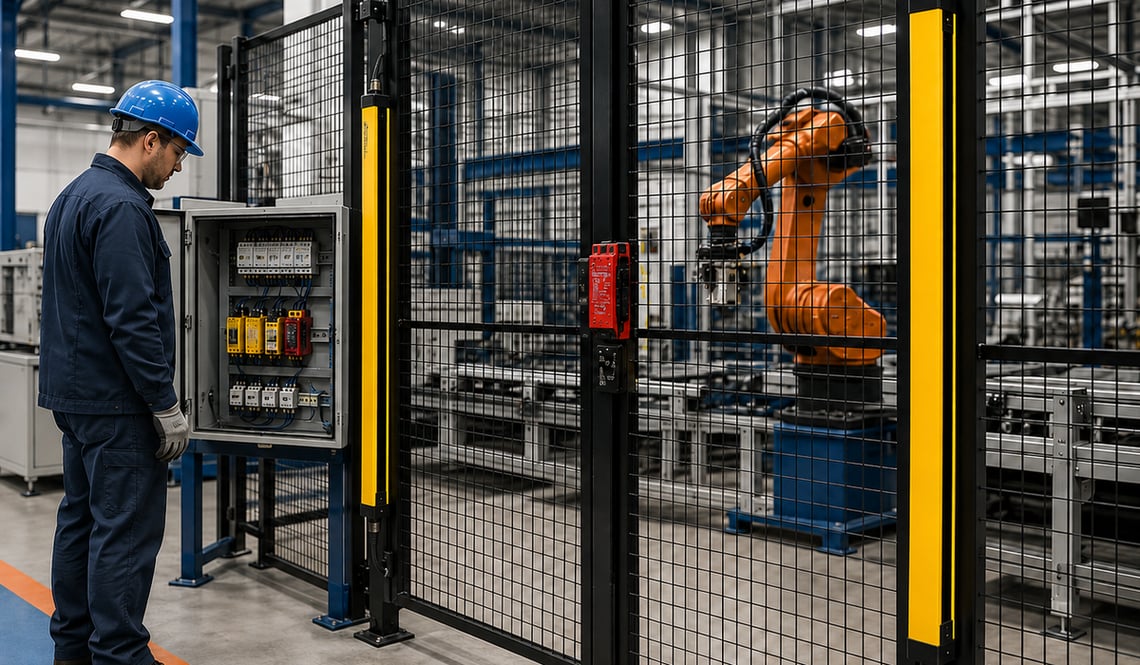
Some safeguarding methods rely on detecting whether a person has entered or approached a hazardous area. Devices such as light curtains help detect access into the protected zone and can be used to trigger a stop or prevent machine motion when someone crosses the sensing field.
Guard Access and Safety Monitoring
In applications where access is needed for loading, setup, cleaning, or maintenance, guard position and machine status must be monitored carefully. Components such as safety gate switches help support safer access by monitoring whether a guard door or gate is properly closed before machine operation is allowed.
Control-Based Safety Measures
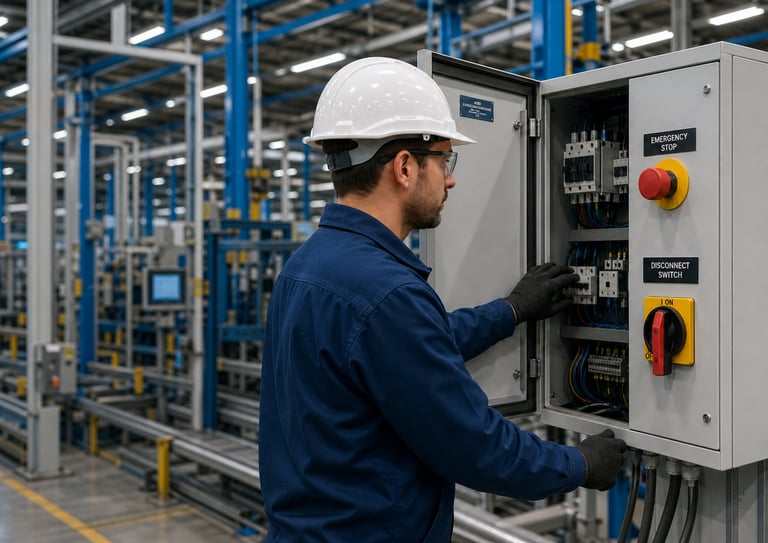
Machine safety is not always limited to physical barriers. Components such as safety relays and emergency stop pushbuttons can help support safer machine behavior by helping monitor safety conditions and respond more effectively when hazardous situations occur.
Where Machine Guarding Shows Up Most Often
Machine guarding is relevant anywhere powered industrial equipment creates exposure to moving or hazardous machine functions. That includes production lines, conveyors, automated cells, presses, cutting equipment, packaging machinery, and other electrically powered systems where workers operate near active machine zones.
It also means machine guarding is not limited to operators alone. Engineers, electricians, maintenance teams, integrators, and panel builders all play a role in helping ensure machines are designed, guarded, and controlled in ways that support safer interaction.
Conclusion
Machine guarding is a foundational part of safer industrial operations because it helps reduce exposure to dangerous motion, hazardous machine areas, and expelled material during equipment use. It is not only about physical barriers. It is also about using the right combination of guards, presence-sensing devices, and safety components to support safer operation across the facility.
For industrial environments, effective safeguarding depends on understanding the hazard, choosing the right protective approach, and making sure the machine can still be operated, accessed, and maintained more safely. When those elements work together, facilities are better positioned to support both productivity and worker protection.
Have Questions? We’re Here to Help!
Call 800-575-5562 today. Our solutions experts are ready to assist you.