Emergency Stops vs. Disconnects: Understanding Their Different Safety Roles
In industrial environments, stopping equipment and isolating electrical energy are related safety actions, but they are not the same thing. Both play important roles in safer operation and maintenance, yet each serves a different purpose. Confusing one for the other can create risk, especially when workers assume a stopped machine has also been fully disconnected from its power source.
That distinction matters because safer industrial systems depend on more than simply halting motion. They also depend on understanding how equipment is stopped during operation, how energy is isolated during service, and which devices are intended for each task. For facilities working with electrically powered machinery, control panels, and operator stations, knowing the difference between emergency stops and disconnects is an important part of safer day-to-day operation and maintenance.
What Is an Emergency Stop?
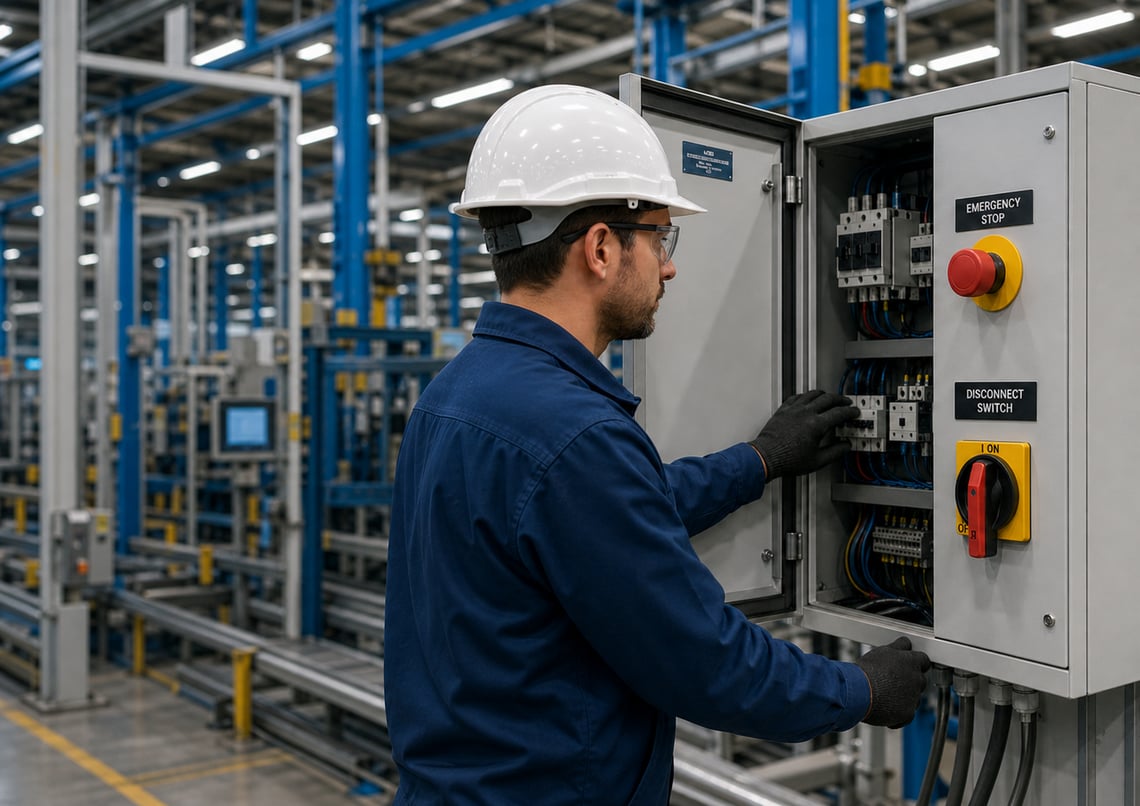
An emergency stop, often called an E-stop, is a manually actuated device used to stop equipment quickly when an unsafe condition occurs. Its purpose is to halt motion or operation as rapidly as the system design allows to reduce immediate risk to people, equipment, or the process. In industrial settings, this usually means pressing a clearly visible red mushroom-style pushbutton at the machine or operator station.
Emergency stops are designed for urgent intervention during operation. They give operators or nearby personnel a way to react when something goes wrong, but they are not intended to serve as the primary means of isolating electrical energy before service or maintenance begins.
What Is a Disconnect?
A disconnect is a device used to isolate equipment from its electrical power source. Its role is not just to stop operation, but to establish a clear point where incoming power can be shut off before inspection, servicing, or maintenance takes place. In industrial electrical systems, that isolation point is essential because equipment can still present a risk even when it is no longer running.
This is why devices such as disconnect handles, rotary disconnects, and safety switches are so important in industrial applications. They support a more defined and controlled approach to shutting off power before work begins.
Why the Difference Matters
The difference between an emergency stop and a disconnect comes down to function. An emergency stop is intended to stop equipment during operation when immediate action is needed. A disconnect is intended to isolate electrical energy so equipment can be serviced more safely. One addresses an unsafe operating condition in the moment. The other helps support hazardous energy control before maintenance or troubleshooting begins.
That distinction matters because a machine that has stopped moving is not necessarily safe to work on. If the power source has not been properly isolated, electrical energy may still be present, and the system may still pose risk. For industrial facilities, safer maintenance depends on understanding that stopping a machine and disconnecting its power are separate actions with separate safety roles.
Common Points of Confusion
Assuming Stopped Equipment Is Deenergized
One of the most common misunderstandings is assuming that if a machine is no longer running, it is safe to service. In reality, a stopped machine may still be connected to electrical energy. That is why disconnect handles and other defined isolation points matter. They help establish where power can be shut off before maintenance begins.
Treating the E-Stop as a Maintenance Shutoff
Emergency stop pushbuttons are important operator safety devices, but they are not a substitute for proper energy isolation. Products such as emergency stop pushbuttons are intended to stop equipment quickly when conditions become unsafe, not to replace a disconnect or lockout/tagout procedure before service work.
Overlooking the Operator Interface
In many applications, the operator interface is where the first response happens. HMIs and physical operator controls, such as pushbuttons and selector switches, play an important role in machine operation, but they should not be confused with devices intended to isolate incoming power. Understanding where operator control ends and electrical isolation begins is part of building safer systems.
Using One Device to Do Two Different Jobs
Emergency stops and disconnects may both be associated with machine safety, but they are not interchangeable. A safer system depends on using each device for its intended purpose: emergency stops for rapid operational shutdown and disconnects for defined electrical isolation. When those roles are understood clearly, facilities are in a better position to support both safer operation and safer maintenance.
Where Emergency Stops and Disconnects Show Up Most Often
This distinction shows up across industrial environments, especially on production equipment, motor-driven systems, control panels, machine operator stations, and maintenance access points. Operators need quick access to stop functions when unsafe conditions arise, while electricians, technicians, and maintenance personnel need clearly defined disconnect points before working on equipment.
That is why both types of devices belong in the broader conversation around safer industrial systems. Emergency stops help support fast response during operation, while disconnects help support proper isolation during maintenance. Both matter, but they should never be treated as though they do the same job.
Conclusion
Emergency stops and disconnects both contribute to safer industrial environments, but they serve different functions. Emergency stops are intended to stop equipment quickly during unsafe operating conditions, while disconnects are intended to isolate electrical power before service or maintenance begins.
For industrial facilities, understanding that difference is essential. Safer operation depends on fast, accessible stop functions, while safer maintenance depends on clearly defined isolation points and proper hazardous energy control. When each device is used for its intended role, facilities are better positioned to support safer work around electrically powered equipment.
Have Questions? We’re Here to Help!
Call 800-575-5562 today. Our solutions experts are ready to assist you.