When production lives or dies by uptime, the wrong encoder isn’t a small mistake—it’s a multiplier for downtime, rework, and safety risk. The right choice depends less on “optical vs. magnetic” as a philosophy and more on how well the device survives your washdowns, shock, heat, chemicals, EMI, and hazard ratings.
Choosing the Right Encoder
Below is a practical guide with a one-page checklist you can download at the end.
1) Map the environment before you map the I/O
List the real stressors: high-pressure/steam washdown, detergent chemistry, oils/coolants, dust/abrasives, salt fog, UV/ozone, and thermal cycling. Then pick ingress protection and construction to match.
- Ingress rating: IP codes define dust/liquid protection (e.g., IP66 jets, IP67 immersion, IP68 continuous immersion). IP69K addresses high-pressure, high-temperature spray—common in washdown.
2) Choose sensing tech for the mess you’re in
- Optical excels at high signal quality/accuracy in clean settings.
- Magnetic tolerates dust, oil, moisture, shock, and temperature swings far better—making it a go-to for metals, mining, and washdown lines.
3) Materials and hygienic design matter
For frequent washdowns or corrosives, prioritize stainless (316/316L) housings, hygienic surfaces, and food/chemical compatibility. Many washdown encoders and accessories are available in stainless with IP69K construction for cleaning with hot, high-pressure jets.
4) Verify the mechanical survival spec
Encoders in steel, paper, or material handling take real abuse. Look for tested compliance to IEC 60068-2-6 (vibration) and IEC 60068-2-27 (shock)—not just marketing words.
5) Engineer the signal path for EMI/EMC
Noisy drives and long cable runs can corrupt signals. Use differential RS-422/RS-485 line drivers with twisted-pair, shielded cabling; terminate and ground correctly; and target EN/IEC 61000-6-2 immunity for industrial environments.
6) Select connector and cable for the job
- M12/M23 connectors are available in stainless, IP68/IP69K variants for washdown.
- Pick jacket materials based on exposure: PUR for oil/abrasion and flexibility, PVC for common cleaning chemicals, TPE for wider temperature ranges.
7) Don’t forget hazardous location certification
If you’re in explosive gas/dust atmospheres, you’ll need the correct ATEX/IECEx category/zone and temperature class stamped on the nameplate. Many “harsh duty” encoders are offered in certified variants.
8) Absolute vs. incremental (and the interface you’ll live with)
- Incremental for speed/relative feedback with TTL/HTL (RS-422) outputs.
- Absolute (SSI, BiSS-C, EtherCAT/PROFINET/EtherNet/IP) to recover position after power loss and simplify homing. Leading vendors ship both optical and magnetic absolute encoders with these buses.
9) Build in diagnostics to cut Mean Time to Repair (MTTR)
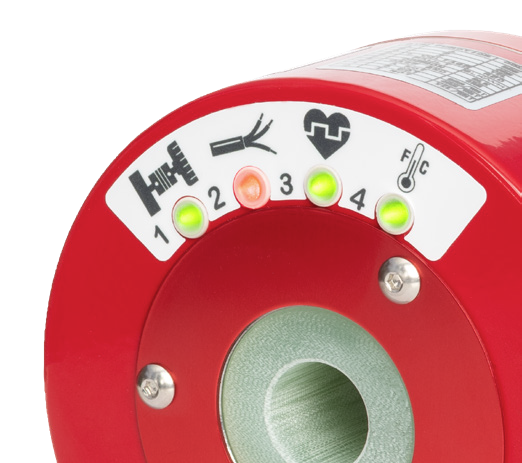
Smart encoders can flag specific faults (voltage, cable integrity, overspeed, temperature, mechanical slip) via LEDs and a digital fault output—so techs stop guessing and fix the actual issue. That’s exactly how Dynapar’s HS35iQ reduces troubleshooting time and cost.
Engineer’s Quick-Hit Checklist
- Required IP/NEMA rating (washdown? immersion? steam/chemicals?)
- Housing & seals: stainless 316/316L and detergent compatibility (food/chem).
- Shock & vibration compliance (IEC 60068-2-27/-2-6).
- Sensing tech fit: magnetic for contamination/shock; optical for max precision.
- Output & network: TTL/HTL (RS-422), SSI/BiSS-C, or industrial Ethernet.
- EMC plan: shielded twisted pair, correct termination/grounding, EN/IEC 61000-6-2 target.
- Connectors & cordsets: M12/M23 IP69K stainless as needed.
- Cable jacket choice: PUR (oil/abrasion), PVC (chemicals), TPE (wide temp).
- Hazardous area approvals: ATEX/IECEx zone & T-code on the datasheet/label.
- Diagnostics: fault LEDs/digital outputs and software tools for event logs.

Why It Matters
Choosing an encoder this way isn’t about checking boxes—it’s about preventing downtime, shortening troubleshooting, and protecting throughput. Smart construction plus fault-aware diagnostics makes the difference between guess-and-swap and first-time-fix (and that’s what gets you through audits and overtime crunches).
The Dynapar HS35iQ: Built for Harsh Environments
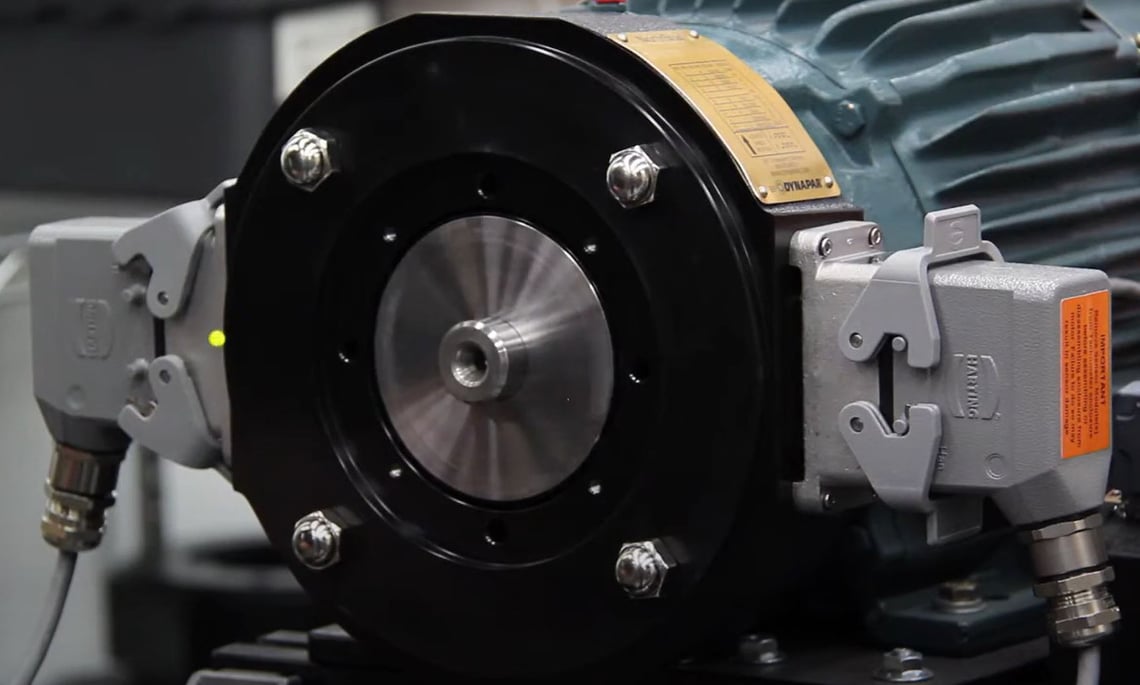
Not every encoder can survive the punishing realities of steel mills, mining operations, or food and beverage washdown lines. The Dynapar HS35iQ is engineered from the ground up to handle extreme stress while maintaining reliable performance. Its rugged design has been tested to withstand up to 400g of shock and 20g of vibration, ensuring stable operation even in high-impact industrial settings1.
For facilities exposed to dust, moisture, and temperature swings, the HS35iQ offers optional IP67-rated housing for enhanced ingress protection, plus an extended operating temperature range from 0°C to +100°C. These features make it well-suited for high-pressure washdowns, corrosive atmospheres, or thermal cycling environments1.
Beyond physical durability, the HS35iQ incorporates PulseIQ™ diagnostic technology, continuously monitoring encoder health factors such as cable integrity, shaft slip, voltage, and temperature. By detecting issues early and providing both visual LED alerts and digital fault outputs, the encoder helps maintenance teams prevent environmental stressors from turning into costly downtime1,2.
Have Questions? We’re Here to Help!
Call 800-575-5562 today. Our solutions experts are ready to assist you.
References
- Dynapar, HS35iQ Encoder with PulseIQ™ Technology Brochure
- Dynapar, Steel Finishing Mill Case Study