Panel Standardization for Data Centers: Components That Support Serviceability, Safety, and Uptime
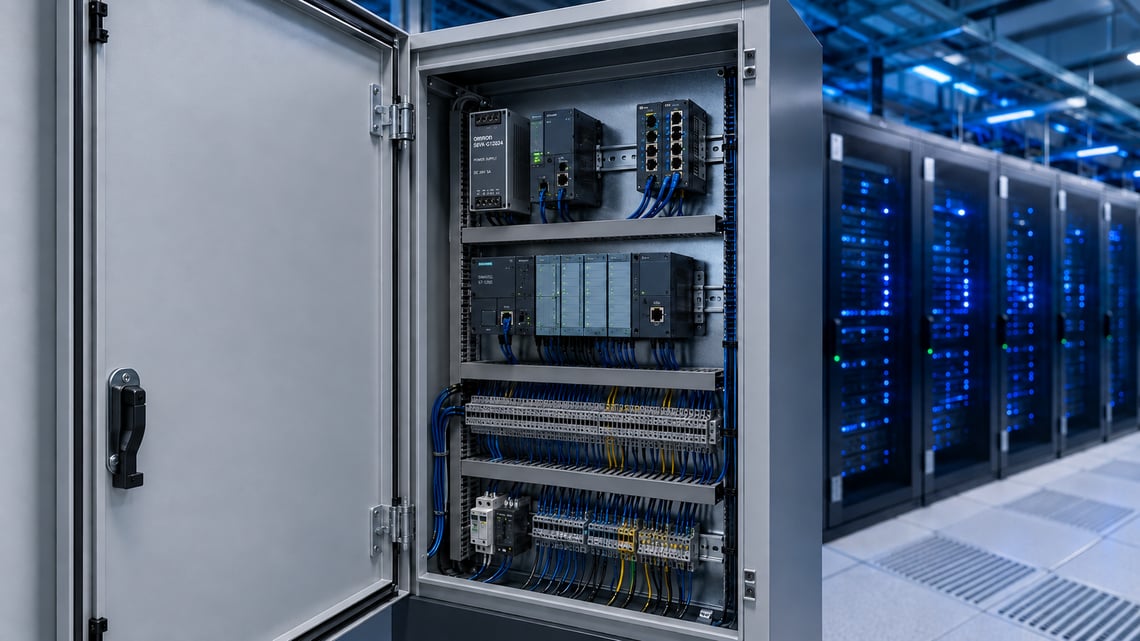
Data centers depend on consistency. From electrical rooms and cooling systems to monitoring equipment, backup systems, and control panels, every part of the facility needs to be organized, accessible, and maintainable.
That makes panel standardization an important part of data center infrastructure. Standardized electrical and control panels can help teams simplify troubleshooting, support safer service, reduce wiring complexity, and make future updates easier to manage.
For facility managers, engineers, contractors, and maintenance teams, the components inside a panel matter. Terminal blocks, DIN rail components, wire duct, markers, power supplies, circuit protection, enclosures, access components, and control devices all help create cleaner, more serviceable panel designs.
Why Panel Standardization Matters in Data Centers
Data center infrastructure includes many connected systems. Cooling equipment, power distribution, backup systems, environmental monitoring, alarms, access controls, and automation equipment may all depend on panels that house critical electrical and control components.
When panels are crowded, inconsistent, poorly labeled, or difficult to access, service becomes harder. Technicians may spend more time tracing wires, identifying circuits, locating devices, or confirming connections before they can begin the actual repair or maintenance work.
Panel standardization helps create a more repeatable approach to layout, labeling, wiring, component selection, and service access. The result is not just a cleaner-looking panel. It is a more maintainable system that helps support faster troubleshooting and more confident maintenance.
Organized Wiring Improves Serviceability
Organized wiring is one of the clearest benefits of panel standardization. Terminal blocks, wire duct, DIN rail components, connectors, markers, and grounding components help create cleaner layouts and clearer terminations.
In data center applications, organized wiring can support maintenance across cooling system controls, pump panels, monitoring enclosures, power distribution panels, backup system controls, and facility automation cabinets. When wires are routed logically and circuits are clearly identified, technicians can more easily understand how the panel is built and where to look when service is needed.
This also supports future changes. As systems expand, teams may need to add sensors, relays, communication devices, control modules, or monitoring equipment. A standardized panel layout can make those updates easier to complete without creating unnecessary wiring confusion.
Power, Protection, and Labeling Support Safer Maintenance
Panel standardization also depends on reliable power, protection, and identification. Power supplies help keep sensors, PLCs, relays, HMIs, communication devices, and other automation components operating correctly. If control power becomes unstable, teams may lose visibility, alarms, communication, or control functions.
Circuit protection and surge protection devices help protect panel components from faults, overloads, short circuits, and transient voltage events. In data center support infrastructure, these products may be used in cooling system panels, pump controls, monitoring panels, equipment cabinets, and power distribution systems.
Labeling and marking are just as important. Clear device labels, wire markers, terminal identification, and panel documentation can help technicians work more efficiently and reduce confusion during maintenance. In environments where service speed and accuracy matter, identification is part of the reliability strategy.
Enclosures and Access Components Protect Panel Infrastructure
Electrical and control components also need physical protection. Enclosures help protect power supplies, terminal blocks, circuit protection devices, PLCs, relays, sensors, communication modules, and wiring from dust, contact, moisture, and environmental stress.
The right enclosure also supports access, ventilation, cable routing, and future expansion. When selecting enclosures for data center support applications, teams may need to consider size, internal spacing, NEMA or IP rating, material, mounting style, cable entry, and thermal management requirements.
Safe maintenance access should also be part of the panel strategy. Access ports, interface devices, disconnects, labeling products, and related safety components can help teams inspect, connect, test, or service equipment more efficiently while supporting safer work practices.
Supporting Panel Standardization Requires the Right Components
Panel standardization is not one product category. It depends on the mix of components that help organize, protect, power, identify, and service electrical systems.
A strong panel standardization strategy may include:
• Terminal blocks for organized wiring and distribution
• DIN rail components for consistent panel layouts
• Wire duct, markers, and connectors for cleaner wiring
• Power supplies for control and monitoring systems
• Circuit protection and surge protection for electrical reliability
• Enclosures for component protection and service access
• Access and interface components for safer maintenance
• PLCs, relays, and communication devices for control systems
• Fans and thermal management products for panel cooling
Each component plays a role in helping data center teams improve serviceability, support safer maintenance, and maintain more consistent infrastructure.
Galco Supports Data Center Panel Standardization
Galco helps data center teams, contractors, facility managers, and maintenance professionals source industrial automation, control, power, and infrastructure products for critical facility applications.
From terminal blocks, power supplies, circuit protection, and surge protection to enclosures, labeling products, access components, PLCs, relays, and wiring components, Galco can help you find products that support cleaner, more maintainable panel designs.
Have Questions? We’re Here to Help!
Call 800-575-5562 today. Our solutions experts are ready to assist you.